
Artificial Intelligence (AI) has become one of the most discussed technologies of the decade. While large enterprises have invested heavily in AI for years, many small and medium-sized enterprises (SMEs) are still asking the same question: Is AI just another technology trend, or is it becoming a business necessity?
The answer is increasingly clear. AI is no longer a futuristic concept reserved for global corporations. Affordable cloud solutions and AI-powered business applications have made advanced capabilities accessible to organizations of every size.
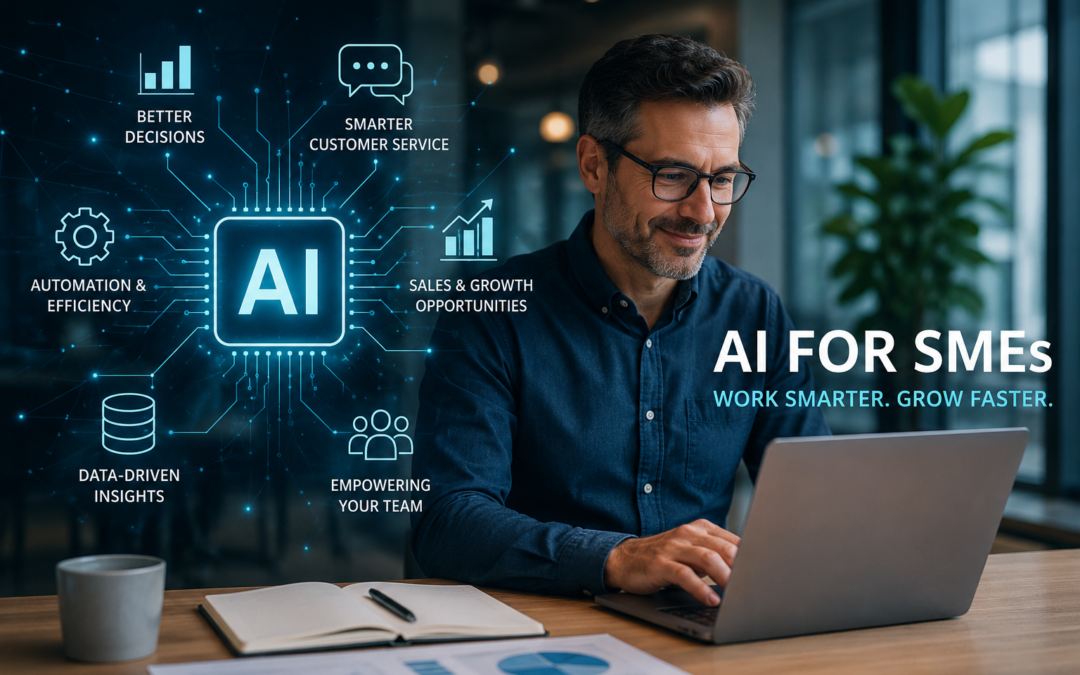
For SMEs, AI is not about replacing people—it is about helping them work smarter. AI can automate repetitive administrative tasks, improve customer service through intelligent chatbots, enhance demand forecasting, identify sales opportunities, and provide management with valuable insights based on real-time data. Employees spend less time on routine activities and more time creating value for customers.
However, implementing AI successfully requires more than purchasing software. Organizations should begin by identifying clear business objectives and selecting practical use cases that deliver measurable results. AI should support the company’s strategy rather than become a technology experiment without a defined purpose.
Data quality is another critical success factor. Even the most advanced AI solution cannot produce reliable recommendations when the underlying business data is incomplete or inconsistent. Many successful AI initiatives therefore start with improving data governance and modernizing ERP systems.
The organizations that gain the greatest competitive advantage are those that approach AI strategically. They focus on solving real business challenges, improving operational efficiency, and enabling better decision-making across the organization.
For today’s SMEs, the question is no longer whether AI will impact their business. The real question is whether they will embrace its opportunities before their competitors do.
At Vance Consultancy, we help organizations evaluate AI initiatives from a business perspective, ensuring that technology investments align with strategic objectives, reduce risk, and create measurable long-term value.
 Nederlands
 English (UK)