
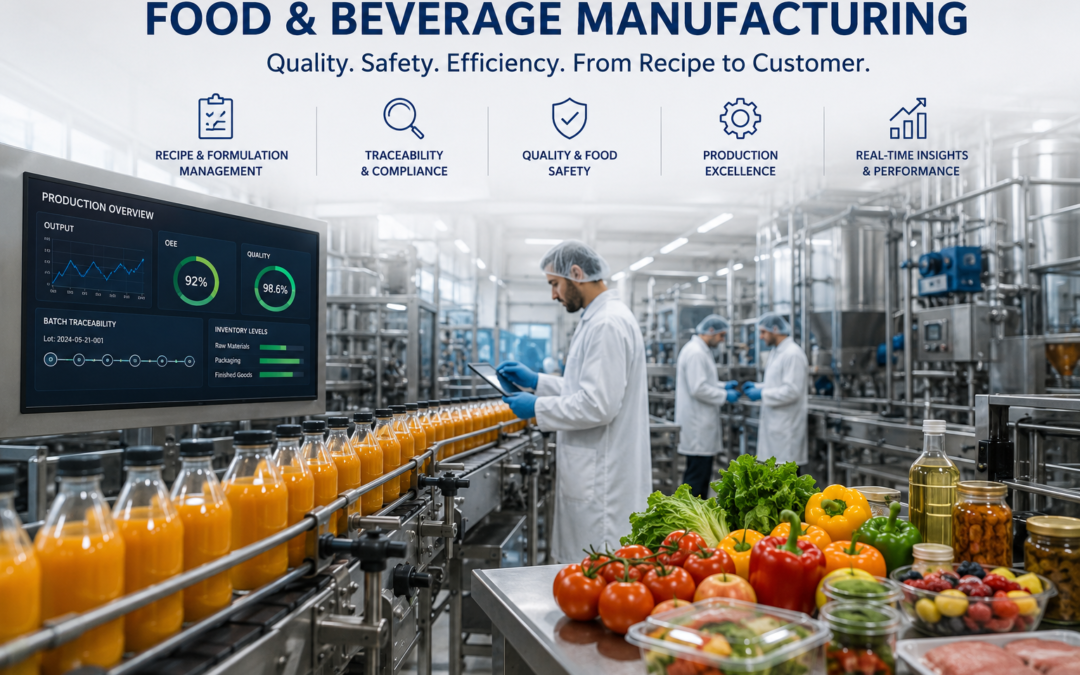
Selecting the right ERP platform is a strategic decision for any food and beverage manufacturer. While solutions such as Microsoft Dynamics 365 and SAP are powerful enterprise platforms, many organizations find that Infor CloudSuite Food & Beverage offers significant advantages because it is designed specifically for the industry’s unique requirements.
Unlike general-purpose ERP systems that often require extensive customization, Infor CloudSuite Food & Beverage includes industry-specific functionality out of the box. Features such as lot and batch traceability, recipe and formulation management, shelf-life control, quality management, allergen tracking, and regulatory compliance are built into the solution. This can reduce implementation complexity and accelerate time to value.
Another strength is Infor’s deep focus on manufacturing. Advanced production planning, demand forecasting, inventory optimization, and warehouse management are tightly integrated, helping manufacturers improve operational efficiency while reducing waste and inventory costs. For businesses operating with narrow margins and strict food safety regulations, these capabilities can provide a significant competitive advantage.
Infor CloudSuite also leverages the Infor OS platform, delivering embedded analytics, workflow automation, artificial intelligence, and role-based dashboards. Decision-makers gain real-time visibility into production, inventory, procurement, and financial performance, enabling faster and more informed business decisions.
This does not mean that Infor is always the best choice. Microsoft Dynamics 365 may be a better fit for organizations that prioritize seamless integration with the Microsoft ecosystem, while SAP can be an excellent option for very large global enterprises with highly complex business structures and extensive multinational operations.
Ultimately, the best ERP solution depends on your organization’s strategy, processes, growth ambitions, and industry requirements. Rather than asking which ERP system is universally “better,” companies should evaluate which platform best supports their specific business objectives.
An independent ERP assessment helps organizations compare solutions objectively, reduce implementation risk, and select the platform that delivers the greatest long-term business value.
 English (UK)
 Nederlands